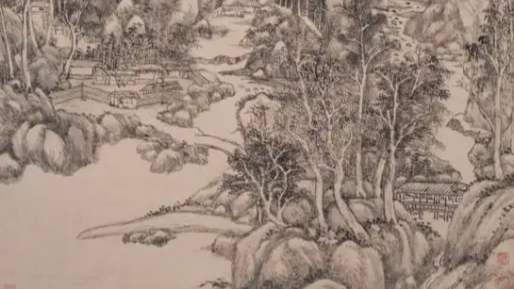
Robust and Vigorous Landscape
Introduction
The Robust and Vigorous Landscape is a quintessential representation of Qing Dynasty Chinese landscape painting, characterized by its dynamic vigor and meticulous detail. This painting serves as a significant example of the artistic genius of the "Four Wangs," a group of renowned painters from the early Qing Dynasty, whose works have profoundly influenced Chinese art. The piece is notable for its vigorous brushwork and meticulous composition, embodying the essence of Chinese literati painting traditions while reflecting the personal artistic style of its creator, Wang Yuanqi. This entry delves into the various aspects of the Robust and Vigorous Landscape, exploring its historical background, artistic features, and cultural impact.
Background
The early Qing Dynasty era was a pivotal period in Chinese art history, marked by the emergence of the "Four Wangs" – Wang Shimin, Wang Jian, Wang Hui, and Wang Yuanqi. These artists were influential figures in the painting circles of the time, known for their shared artistic styles and strong connections, both educational and familial. The Robust and Vigorous Landscape by Wang Yuanqi is a notable artwork from this period, reflecting the Qing Dynasty's preference for literati-style paintings rooted in traditional techniques and classical aesthetics
The "Four Wangs" were celebrated for their dedication to imitating and building upon the works of ancient and classical masters. Their paintings were heavily influenced by earlier artistic icons like Huang Gongwang, Ni Zan from the Yuan Dynasty (1271-1368), and Dong Qichang from the Ming Dynasty (1368-1644). This reverence for past masters is evident in Wang Yuanqi's Robust and Vigorous Landscape, which also showcases his distinctive style characterized by textural shading and robust brushwork.
Concept and Philosophy
The concept and philosophy behind the Robust and Vigorous Landscape are deeply rooted in the literati painting tradition. This style of painting emphasizes personal expression, scholarly ideals, and a deep connection with nature. Wang Yuanqi, like his peers, embraced these principles, seeking to create art that transcended mere representation, capturing the spirit and essence of the natural world.
The Robust and Vigorous Landscape epitomizes this philosophical approach. Through its dynamic composition and energetic brushstrokes, the painting conveys a sense of movement and vitality, inviting viewers to immerse themselves in the depicted landscape. The work reflects a harmonious blend of observation and imagination, a characteristic feature of literati art, where the artist's inner world and emotional response to nature are paramount.
Artistic Features
Composition
The composition of Robust and Vigorous Landscape is meticulously crafted, reflecting Wang Yuanqi's mastery in organizing complex elements within a harmonious whole. The painting's layout guides the viewer's eye through a series of interconnected scenes, each detailed yet cohesive in the larger context. The use of perspective and spatial arrangement creates a sense of depth and movement, drawing the viewer into the landscape's dynamic vistas.
Techniques
Wang Yuanqi's techniques in Robust and Vigorous Landscape exemplify his prowess as a painter. His use of vigorous brushwork and textural shading creates intensity and richness within the artwork. The brushstrokes are deliberate and expressive, capturing the essence of the landscape with precision and flair. These techniques, combined with a profound understanding of traditional Chinese painting methods, underscore Wang Yuanqi's status as a master of his craft.








